Some discoveries make good stopping places. Others make you wonder how much work it would take to move in. These two Structory buildings offer both: a small wooden firetower overlooking a river, and an old manor with enough cobwebs to make every doorway feel suspicious.
A lookout that fits the landscape
The firetower stands on a wooded slope, with a river below and a broad birch-covered ridge behind it. Its narrow footprint leaves the hillside visible around the supports. From a distance, the roof and balcony make a clear landmark between the trees.
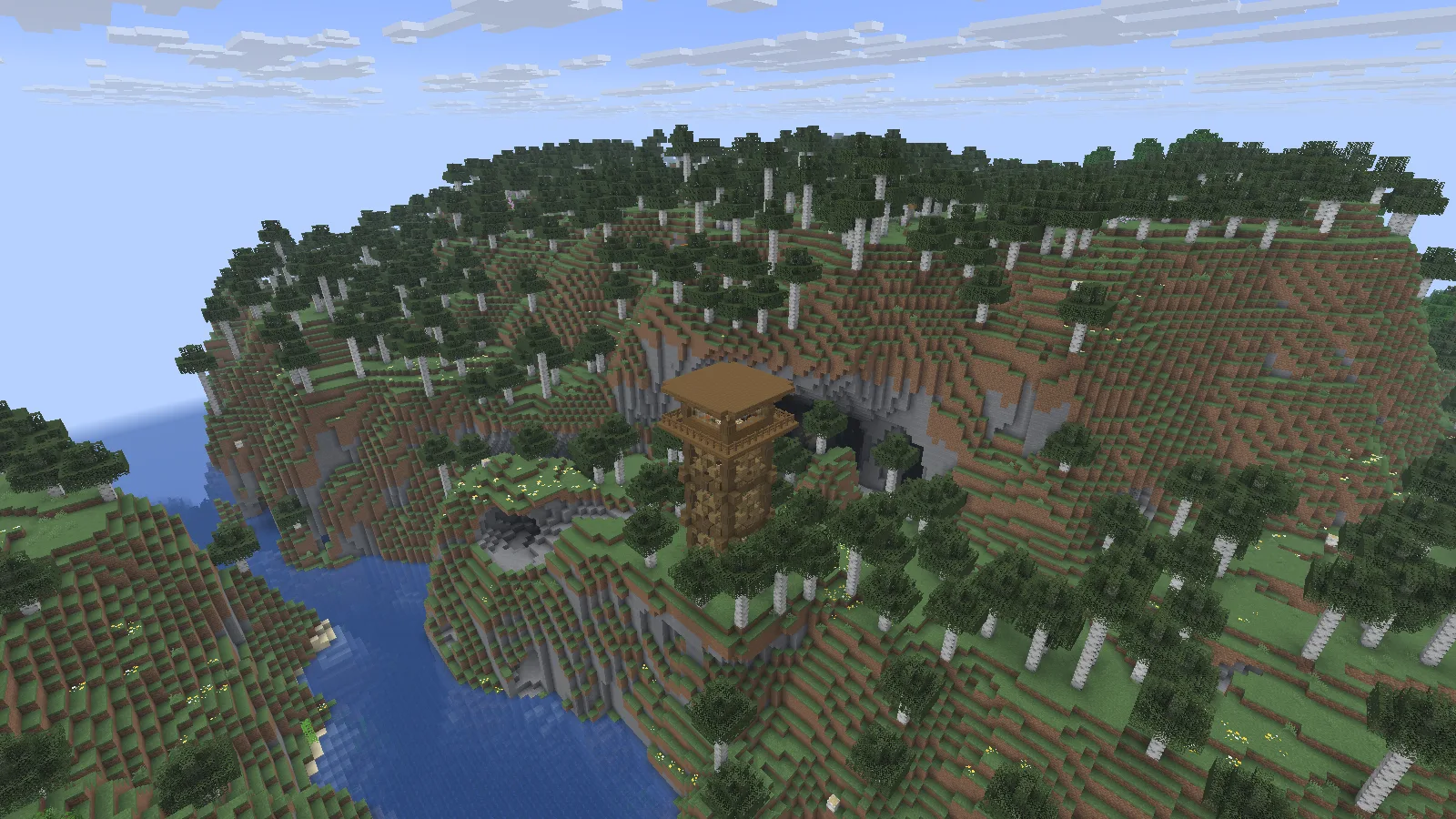
If you want to turn a discovery like this into a travel stop, start with the approach. Find a route from the riverbank to the entrance that follows the slope without forcing a climb over every grass block. A short stair and a marked landing could connect the tower to a small dock. Keep the clearing modest so the building still feels tucked into the forest.
Inside the upper room, a chest and cartography table sit under a hanging lantern. Cobwebs fill the corners above the windows. The room already has the shape of a compact map station.
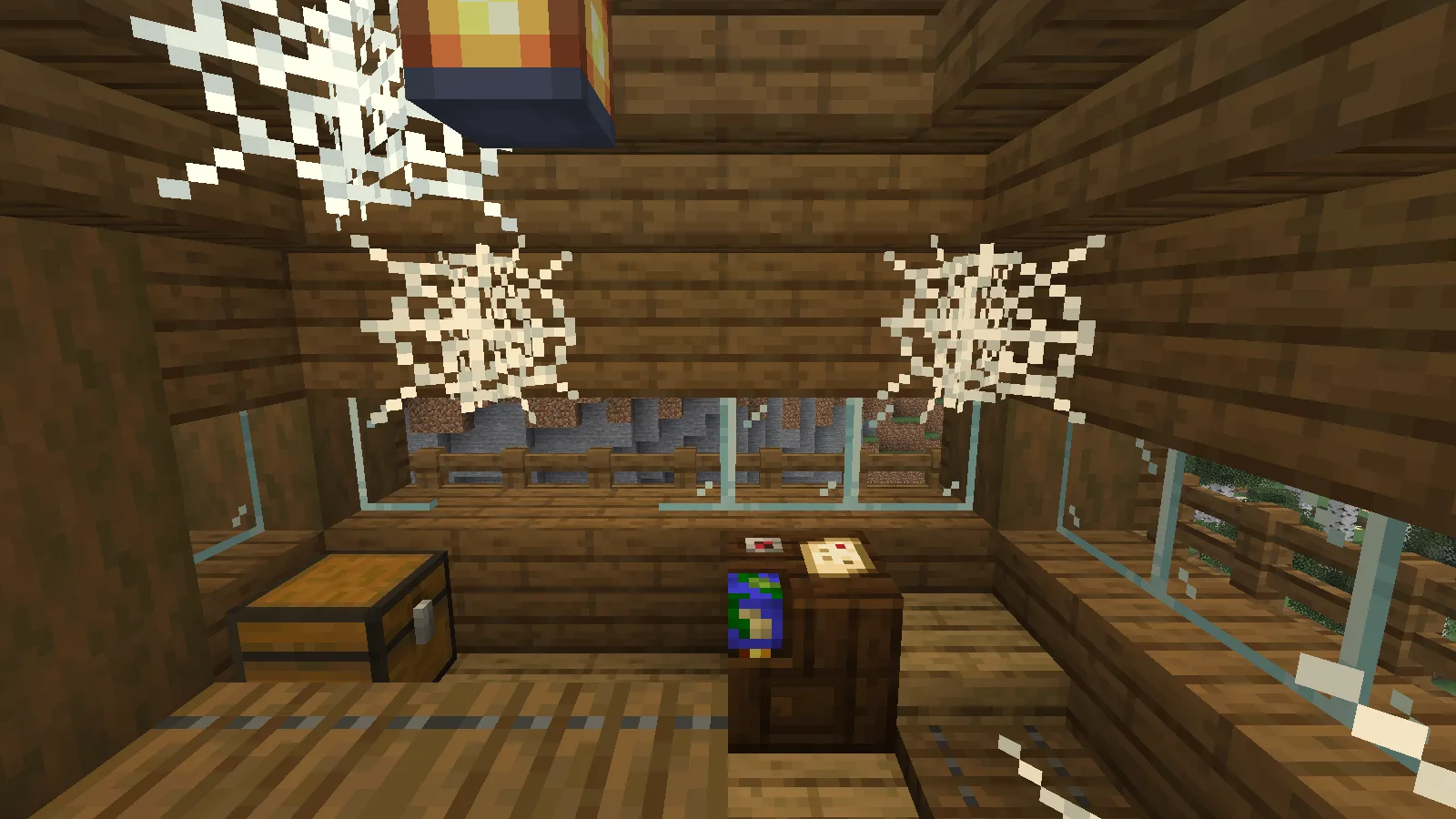
For a restoration, decide what you want to keep before removing the weathered details. Clearing the route between the entrance, chest and balcony would make the space easier to use. Leaving some decoration high in the corners could preserve its abandoned character. Check a chest before deciding whether it supplies your trip; its presence does not tell you what is inside.
Give the balcony a purpose
The balcony looks along the river between steep wooded banks. The railing and roof frame the view without enclosing it completely.
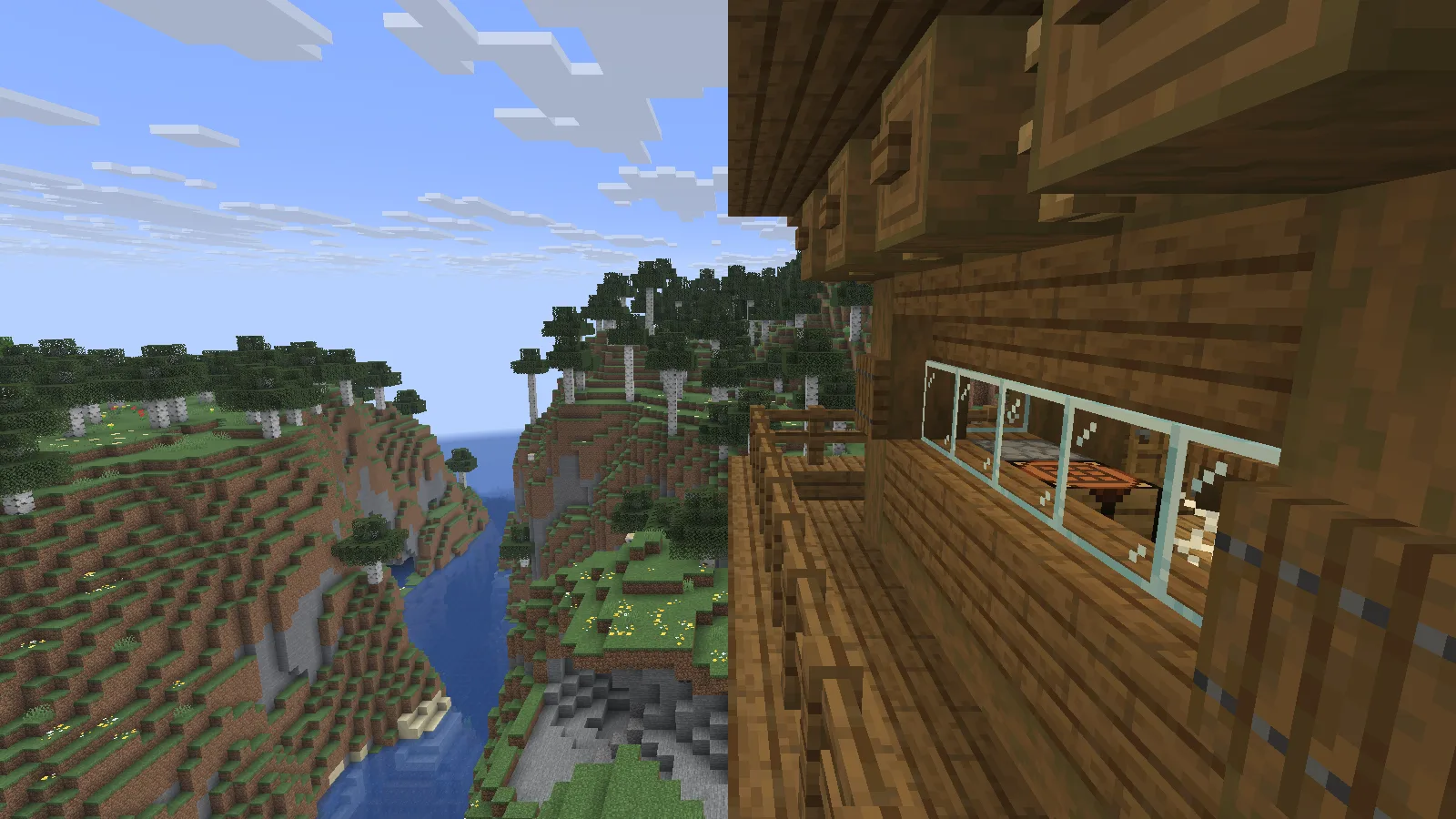
Use a viewpoint like this to choose your next destination: a landing on the opposite bank, a path along the water or a second marker farther down the valley. Before setting out, note the tower's coordinates and identify the route back up from the river. A familiar roof above the trees is helpful, but it does not show where the entrance meets the ground.
The manor is a larger project
The old manor trades the tower's simple outline for several floors, dark wooden walls and rows of barred windows. Green copper edges break up the roof, while cobwebs spread across the facade. The river beside it gives the building a useful orientation point.
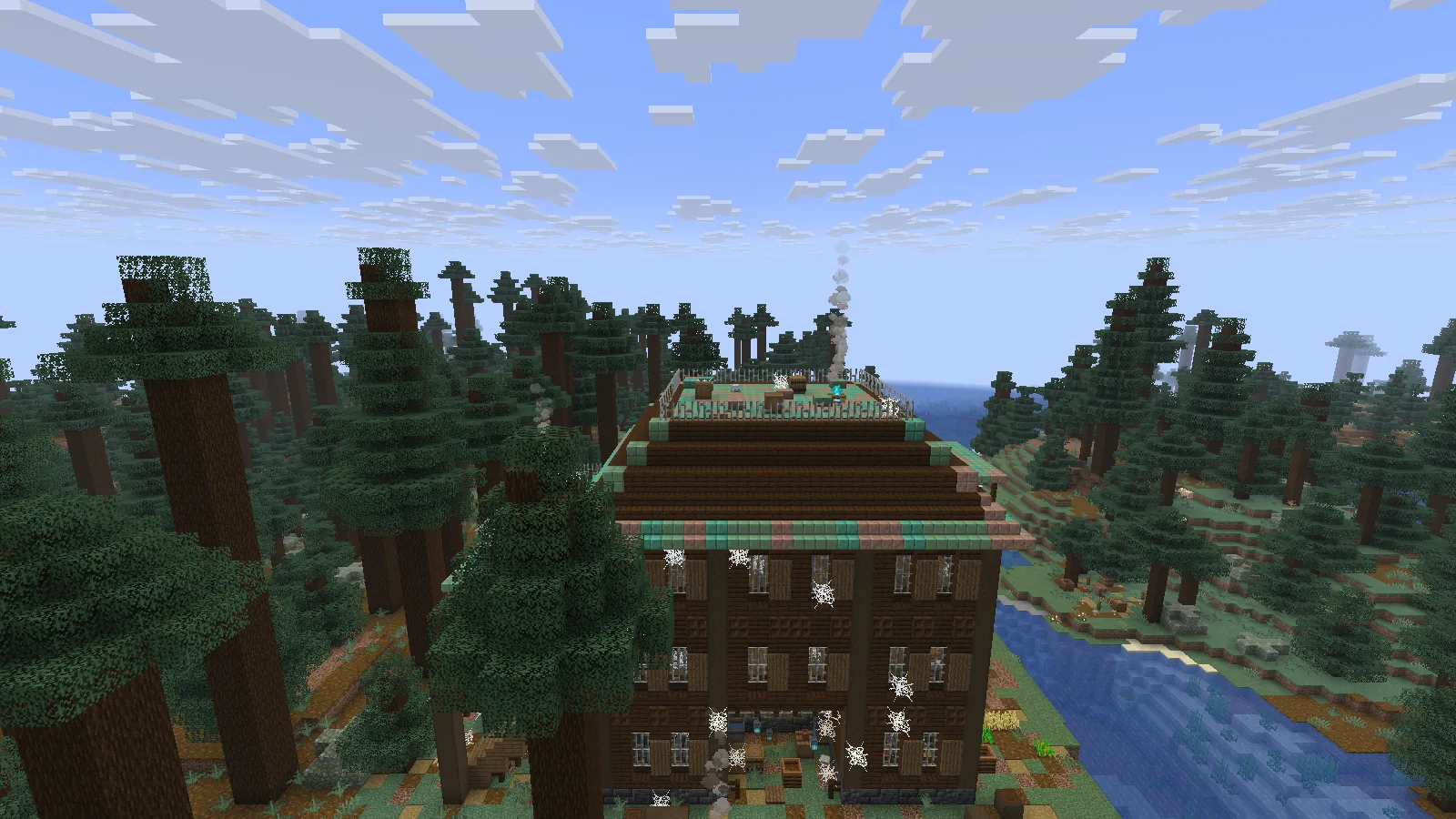
A restoration here benefits from a smaller first goal. Choose one entrance, one room and one route between them. Turning every floor into finished living space at once can leave you with a large building that is still awkward to navigate.
Near the entrance, iron bars, soul lanterns and a blue campfire make the mood much less welcoming. Grass and webs crowd the approach.
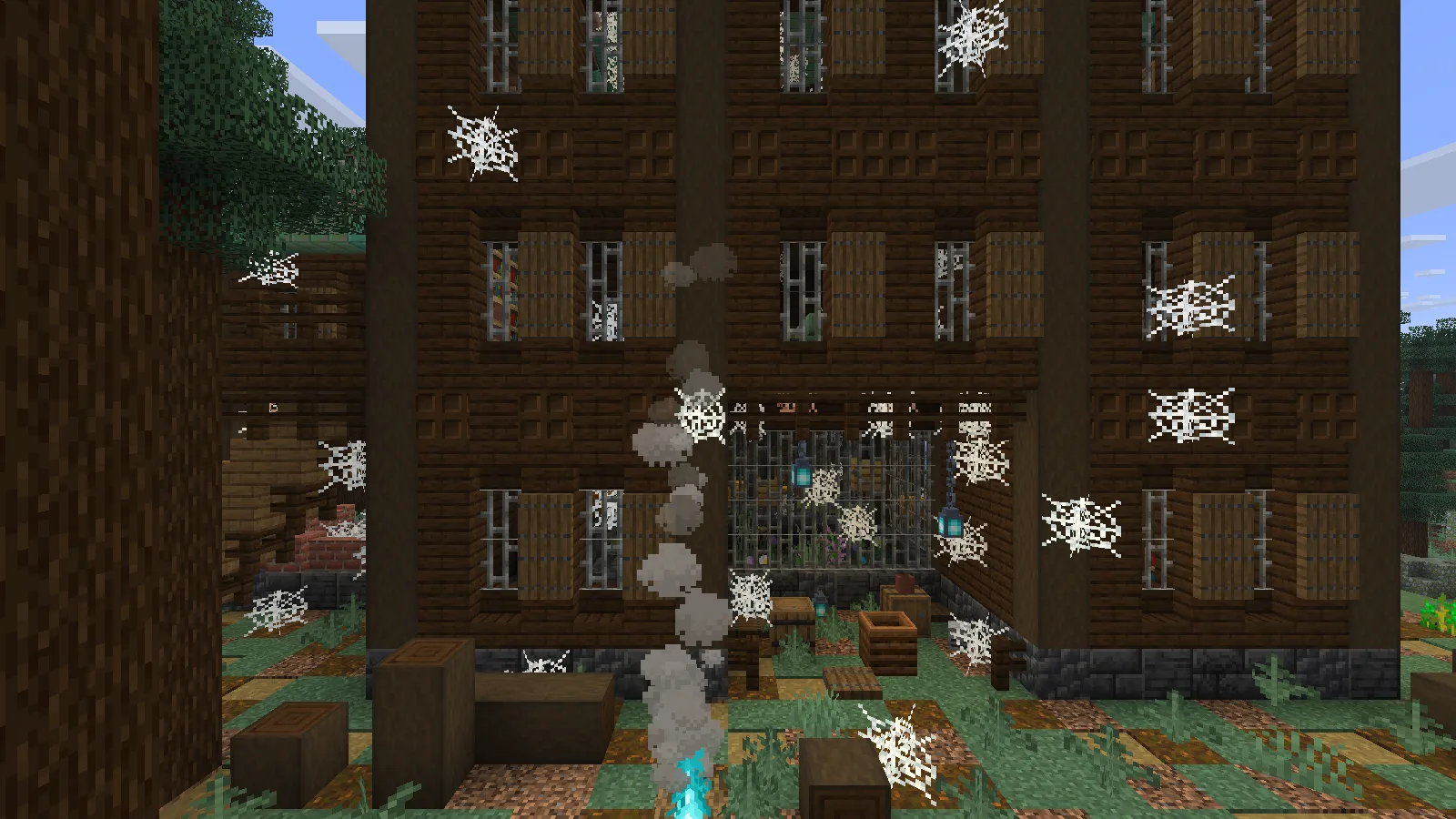
For your first visit, bring food, lighting and tools, and leave room to turn back. Mark the doorway you used before exploring farther. If you later remodel the place, make that main route readable before adding side rooms or decoration.
An upper room has blue candles on a table, with more cobwebs around the doors and windows. The small pool of light suits the atmosphere, though you may prefer brighter lighting for a room you use regularly.
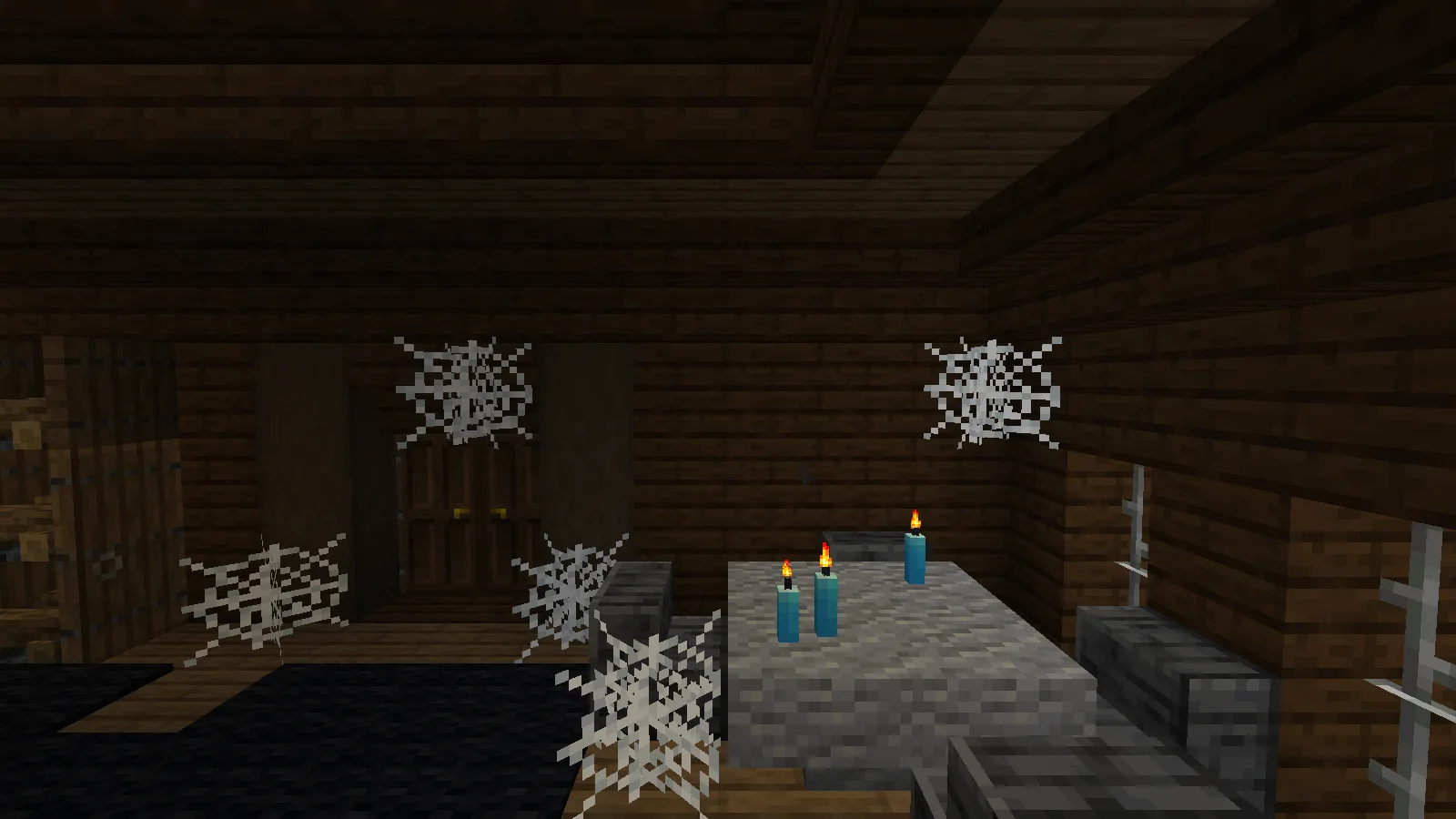
Keep one distinctive detail, such as the candle table, and arrange storage or seating around it. That gives a restored room a connection to the original building without preserving every obstruction.
Add structures where the world is still new
Choose the Data Pack ZIP matching your Java version. For a fresh world, open Create New World → More → Data Packs, add the intact ZIP, move it to Selected and choose Done before creating the world.
Structory also supports existing worlds, but its structures appear only in newly generated chunks. Make a complete backup before adding it. Revisiting explored land will not place a new manor beside an old base.
These views use Java 26.2, Structory release 1.3.17 and seed 20260928100. The firetower is near X 2480, Z -3904; the manor is near X 6384, Z -7792. Match the game and pack version when looking for the same sites.
Comments & questions
Share what worked, ask for help or reply to another player.
No comments yet. Share what worked for you.