
Waymarker is an original Modonix project with one practical action: place its block at a useful spot, interact with an empty hand and read that block's coordinates above the hotbar. It works as a simple trail marker and as a small Java mod whose code you can explore without starting with a large content pack.
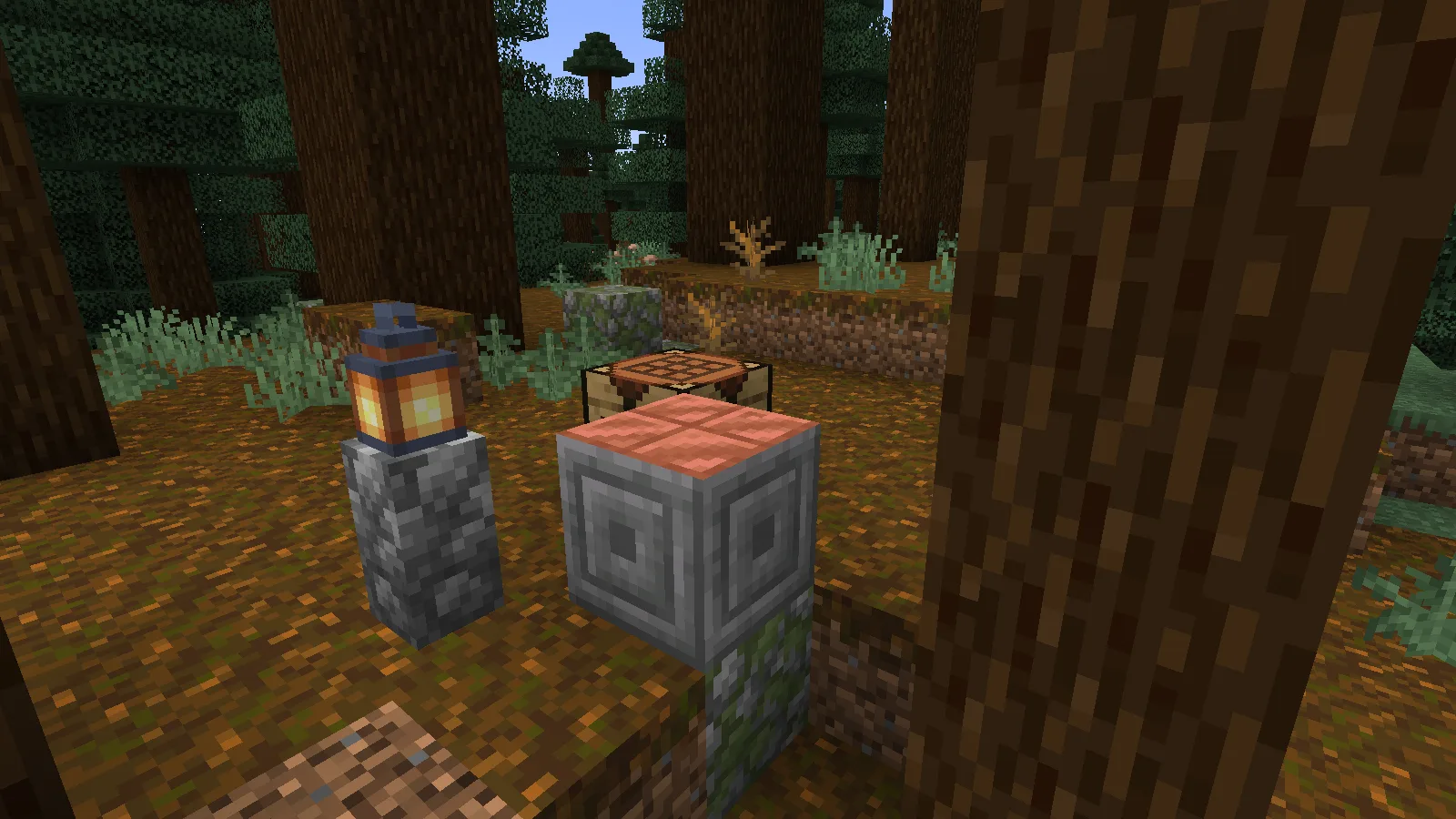
Waymarker beside a forest path in our arranged Java 1.21.1 example.
Install and craft it
Use Minecraft Java 1.21.1 with NeoForge 21.1.219. Put the Waymarker 0.1.0 game JAR in that instance's mods folder, then open a new world or a backup. Choose the game JAR for playing; the separate Source ZIP is for editing and building the project.
At a crafting table, place one compass in the center and one cobblestone in each of the eight surrounding slots. Take the Waymarker and place it beside a trail junction, mine entrance or base.
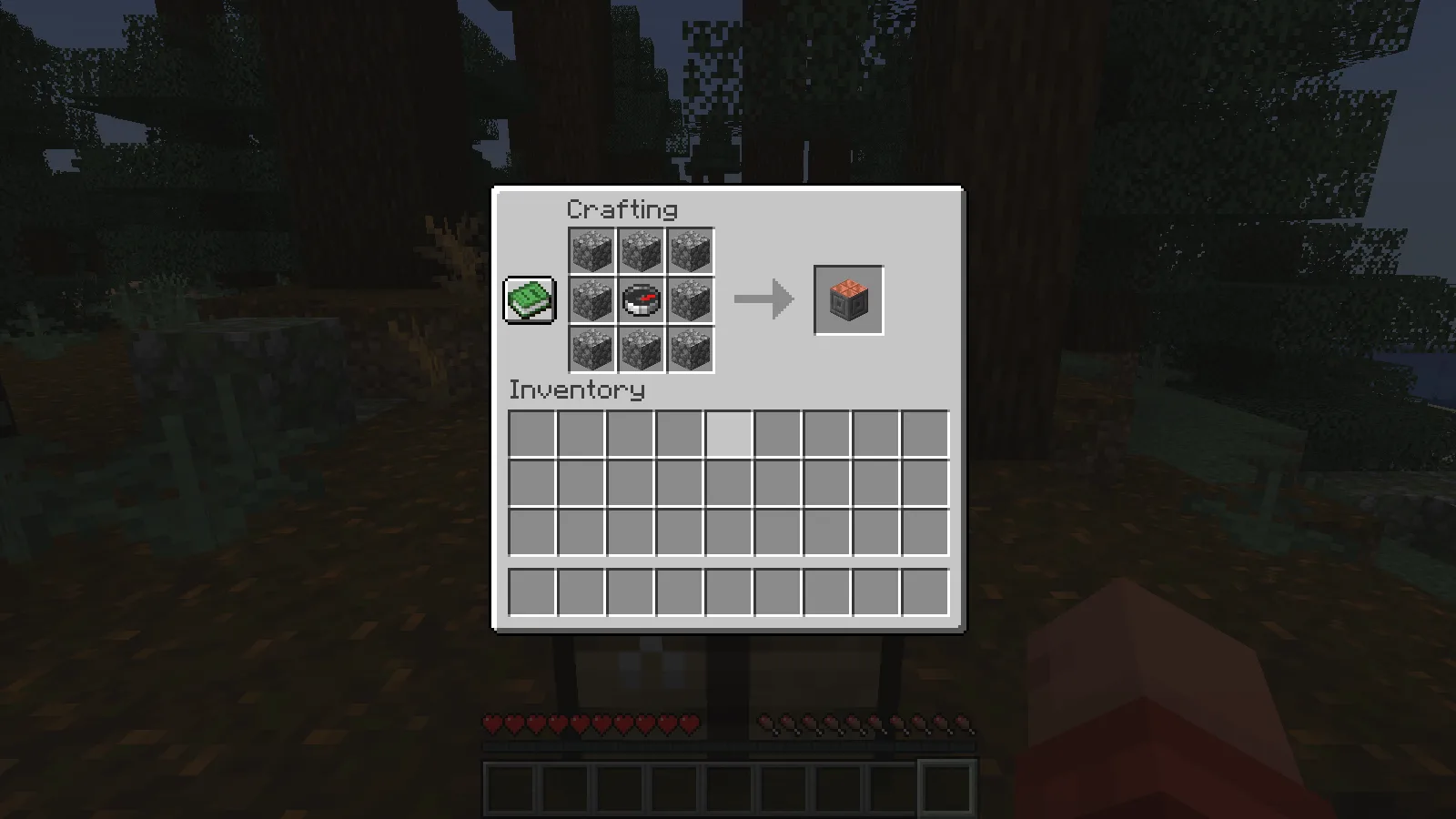
One compass surrounded by eight cobblestone makes one Waymarker.
Select an empty hotbar slot and right-click the marker. The action bar shows its X, Y and Z. Pair it with a sign such as “River landing” or “North mine” to give those coordinates context. To move it, collect it with a pickaxe and place it again.
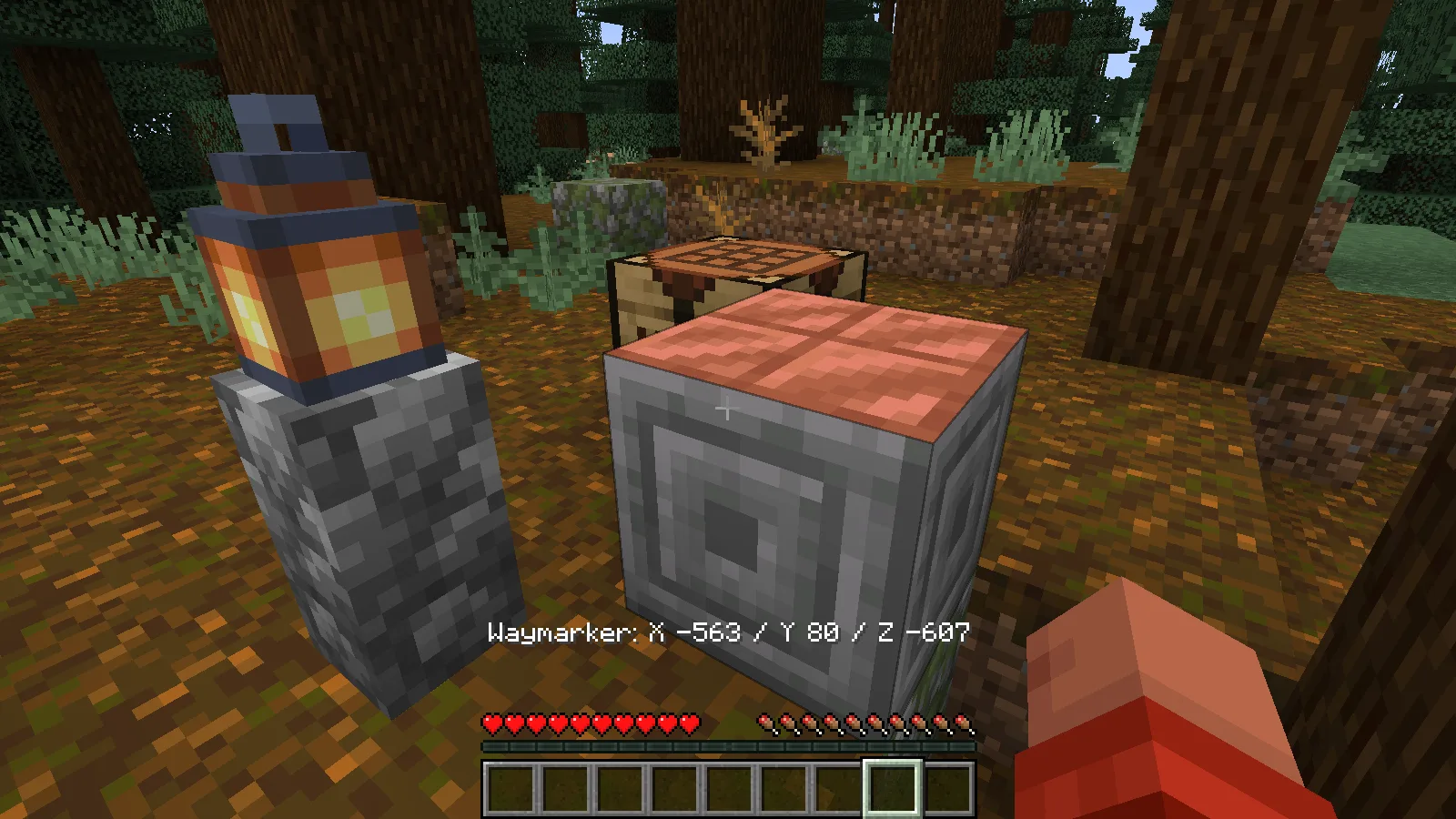
An empty-hand interaction displays the placed marker’s X, Y and Z.
This is a coordinate marker, so it does not teleport you or change your spawn. Keep a bed or another spawn-setting method for that separate job.
Build your own copy from the Source ZIP
- Install JDK 21, extract the Source ZIP and open its
modonix-waymarkerfolder. This folder containsbuild.gradleand the Gradle wrapper. - Open a terminal in that folder. On Windows, run
.\gradlew.bat build. On macOS or Linux, runsh ./gradlew build. The first run downloads the build dependencies. - After a successful build, find
build/libs/modonix-waymarker-0.1.0.jar. With Minecraft closed, use that file in your separate instance'smodsfolder, replacing the previous Waymarker JAR. - Open a test world and try the recipe and empty-hand interaction. Keep your main world backed up while experimenting.
The two Java classes register the block and handle its interaction. Resource JSON files define the recipe, displayed name, model and drop. A name or recipe change makes a manageable first edit. If Gradle reports the wrong Java version, check the terminal's java -version and select JDK 21 before retrying.
The original implementation is MIT licensed. NeoForge supplies the framework and MDK foundation; the source package retains those upstream notices. The model uses textures supplied by the installed game.
Comments & questions
Share what worked, ask for help or reply to another player.
No comments yet. Share what worked for you.